
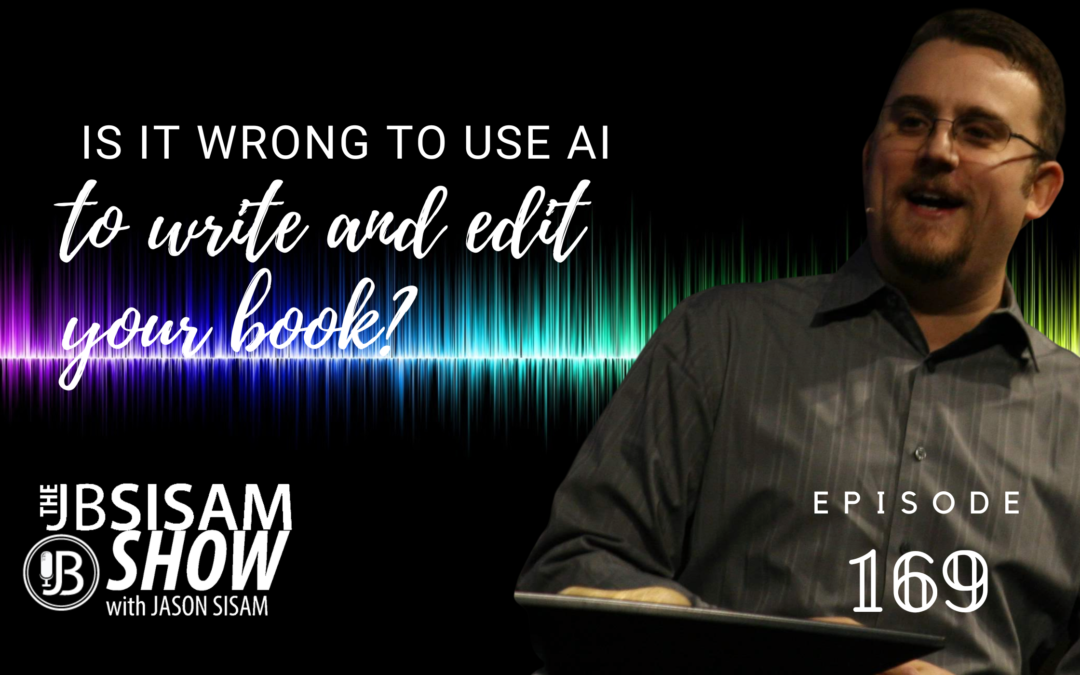
It’s obvious that artificial intelligence is here to stay. People are afraid of the unknown, and because of that fear, they allow it to control their lives and stop them from becoming the best writer they can become.
I use artificial intelligence in most aspects of my life. In fact, I’d argue it’s making me a better writer—one that can effectively take his thoughts and craft something people actually want to read.
In todays’ episode, I’m talking about how to use artificial intelligence wisely, and the traps writers can fall into if they use it the wrong way. We’ll tap into it’s power, some tools I’ve discovered along the way, and so much more!
1. Be a writer first!
Our job as writers is single focused—to write stories that are personal and will entertain. Our influence as scribes is only as strong as our uniqueness in how we look at the world. That worldview—how we see, believe, act—is what we instill into our written prose. Yet, today, so many are fixated on AI that their words often become artificial. I’ve used AI long enough to recognize what’s been written by a human and what’s been written by a computer.
And no, it’s not the use of em dashes that give it away, as some might say. I’ve written every word and I used a few em dashes along the way.
AI written text has artifacts that give away it’s unique way of writing. That being said, those who train AI can avoid some of the common pitfalls that it generates. However, as Stephen Covey once said, “The main thing is the keep the main thing, the main thing.” That’s how we stay relevant, and effective, focus our efforts on important goals and accomplish them. IN other words, you’re a writer, so… write!
2. Use AI with your writing.
I know what you’re thinking, Jason just said to write and avoid AI. But go back and re-read. I said our main thing is to be writers first. AI is just a tool we get to use to help us craft better stories and make sure we’re putting out the very best.
I use AI in some great ways:
- It’s my story muse: As I am pondering a story, one that’s pricking my heart to write, I’ll craft a simple outline and story beats. Once that’s done, I’ll put that right into an AI tool. I ask some specific questions to help me ascertain my writing and if I need to fix anything.
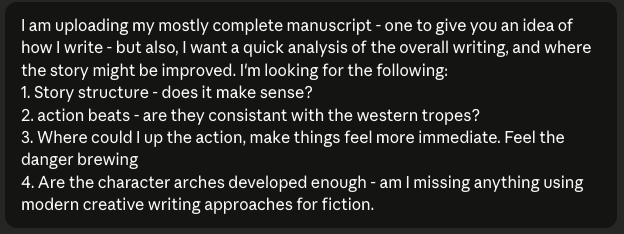
- Grammar Check: Believe it or not, you’re not perfect and you will miss words you misspelled and bad commas etc. I use Prowriting Aid along with Scrivener’s grammar checker to help me fix my manuscript. I even use the tool to help me look at sentences that are too common in the chapter, and need to be rewritten. Yes, it takes AI to see all of that, and it’s a great use of the tools.
- Plot Hole finder: This one is a little more intense, and you have to take time to train the AI to your writing style, other books you’ve written, and help it learn how you write. Then, I ask where am I missing things, and where does the plot fall apart, or what in the book doesn’t really work. Then I ask it to give me a list, page, paragraph, chapter etc of where I need to take a look. Then, I decide to either keep, or ask more qualifying questions to the tool to dialogue options for fixing, based upon other books of the same genre or from your own writing.
- Ask it to give sample writings: I know, this one is a gray area. But, having AI write a sample edit, or even a sample chapter to help you figure out your next move, is valuable, and can help you see your work from another perspective. *Note: Do not use what AI writes as is… always do your due diligence.*
3. Be smart and have fun!
Artificial Intelligence is a lot of fun! In fact, I wrote this whole blog post using a tool I created with AI. It’s called Flowwriter. You can try it out for free by clicking here. Remember at the end of the day, you’re in control what is created and what AI does for you. If you don’t like it’s suggestions, ask clarifying questions, don’t take it’s answer as gold, do your research, and do your honest assessment of what it’s written for you.
AI can make mistakes, so be careful not to simply upload for publication without first checking all cites, research, and writing it does. I just finished a book, had AI help me like a developmental editor would—even asked it to write two chapters for me as an example—I want to be clear, I still wrote the chapters in full, using AI’s suggestions as a reference to help me craft my original idea to completion.
 Jason (J.B.) Sisam. Best-selling Amazon author of the Christian Early Reader book,
LEAVE A COMMENT HERE:
Please note: I reserve the right to delete comments that are offensive or off-topic. Also, this is a clean website, use of any language is not tolerated and your post will be deleted.